
Few wildlife encounters are as special as seeing a Bonobo in its natural habitat. Found only in the Democratic Republic of Congo, this remarkable great ape is one of our closest living relatives and one of Africa’s most sought-after primate sightings.
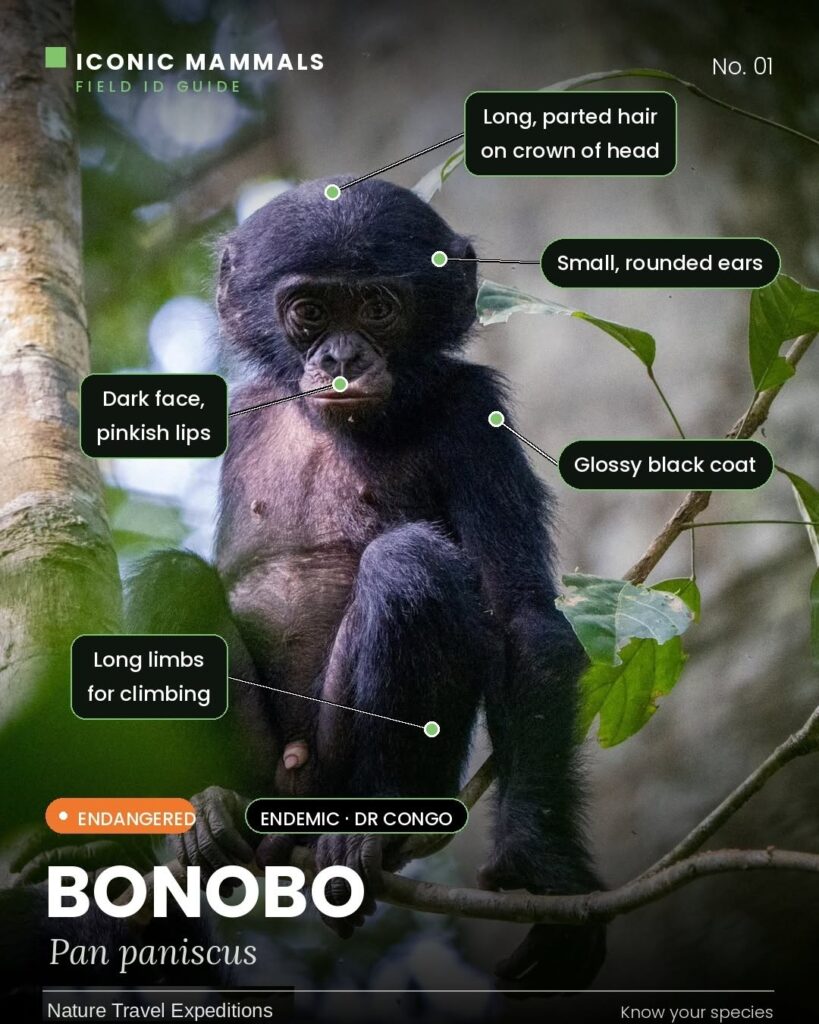
How to Identify a Bonobo
Bonobos are often mistaken for Common Chimpanzees, but there are several distinctive features to look for:
- Slender build with noticeably longer legs
- Glossy black coat
- Black face with distinctive pink lips
- Small, rounded ears
- Long hair on the head that forms a characteristic centre parting
Compared to the more robust Common Chimpanzee (Pan troglodytes), Bonobos appear more graceful and elegant, with their unique “hairstyle” making them surprisingly easy to identify once you know what to look for.
Where Are Bonobos Found?
Bonobos are endemic to the Democratic Republic of Congo and occur nowhere else on Earth. They inhabit the country’s vast lowland tropical rainforests, swamp forests, and seasonally flooded forests.
They are primarily active during the day, spending much of their time foraging, travelling through the forest canopy, and interacting within their close-knit social groups.
Why Bonobos Matter
Bonobos play an essential role in maintaining the health of Central Africa’s rainforests. As they feed on a wide variety of fruits, they disperse seeds throughout the forest, helping regenerate vegetation and maintain one of the world’s richest ecosystems.
Did You Know?
Bonobos are found only south of the Congo River, while Common Chimpanzees occur to the north. The Congo River acts as a natural barrier, preventing the two species from meeting in the wild. This long-term isolation is one of the reasons they evolved into two distinct species.
Conservation Status
IUCN Red List: Endangered
Habitat loss, hunting, and political instability continue to threaten wild Bonobo populations, making responsible ecotourism and conservation efforts increasingly important for the future of this extraordinary ape.
Interested in seeing Bonobos in the wild? Our specialist wildlife expeditions to the Democratic Republic of Congo offer a rare opportunity to observe one of the world’s most fascinating primates in its natural rainforest home.