
Unique chance to explore the secret world of the Bonobos in the Congo.
Experience one of Africa’s most exclusive wildlife expeditions on this unforgettable Congo rainforest safari, focused on the remarkable Bonobo and the rare Congo Peafowl. This unique journey takes you deep into the remote Congo Basin rainforest of the Democratic Republic of Congo, combining river travel, rainforest trekking, canoe exploration, and guided wildlife tracking in one of Africa’s most biologically important wilderness regions.
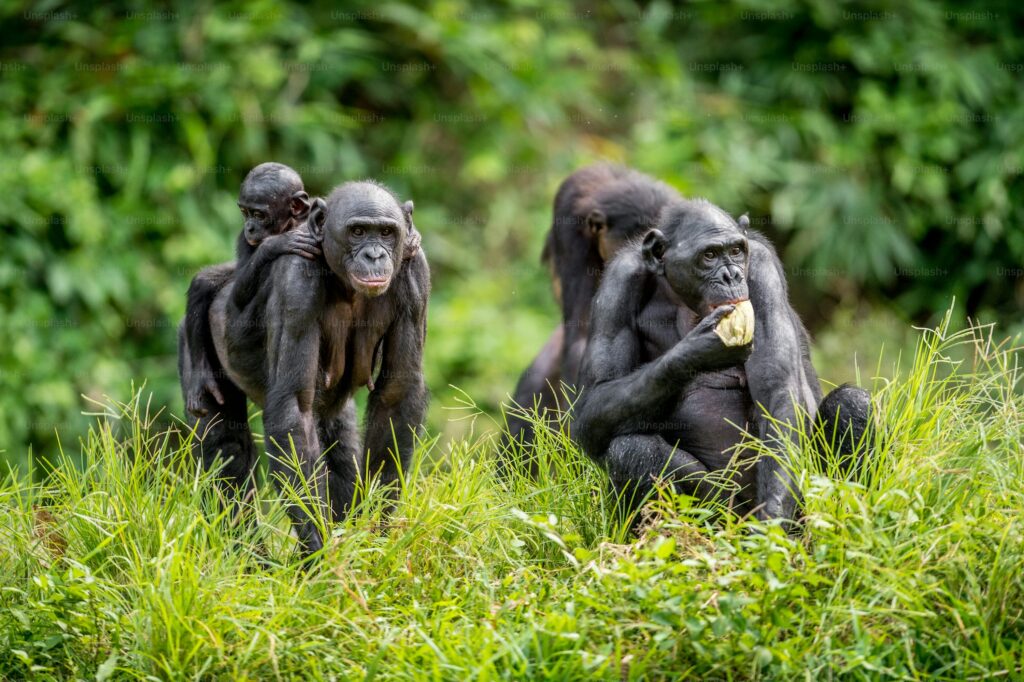
Travelling from Kinshasa into the remote Equateur Province and the Lomako-Yokokala Faunal Reserve, guests have the rare opportunity to track and observe endangered Bonobos (Pan paniscus) in their natural habitat — an experience very few people in the world have witnessed. The expedition also targets the elusive Congo Peafowl (Afropavo congensis), one of Africa’s rarest endemic birds.
Along the way, guests may encounter forest monkeys, duikers, hornbills, turacos, kingfishers, and a rich diversity of Central African rainforest wildlife. This is a true wilderness expedition into one of the least explored rainforest ecosystems on Earth.


| Starts in Kinshasa | Ends in Kinshasa | Duration: 14 Days | Next departure: September 2027 |
Highlights:
Lomako-Yokokala Faunal Reserve – One of the most important protected strongholds for wild Bonobos in their natural rainforest habitat.
Bonobo Tracking Experiences – Rare, close-range encounters with one of humanity’s closest relatives in deep forest social groups.
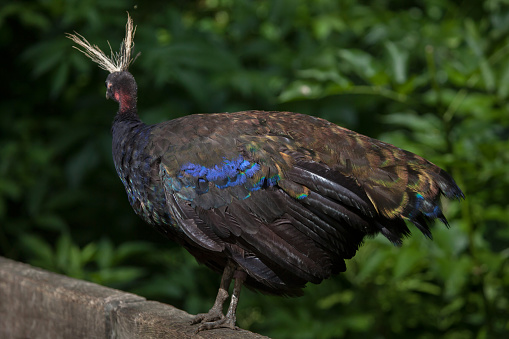
Congo Peafowl Habitat – Remote primary rainforest offering one of Africa’s best chances to encounter this elusive endemic bird.
Lulonga & Lomako River Systems – Slow canoe journeys through untouched waterways deep inside the Congo Basin.
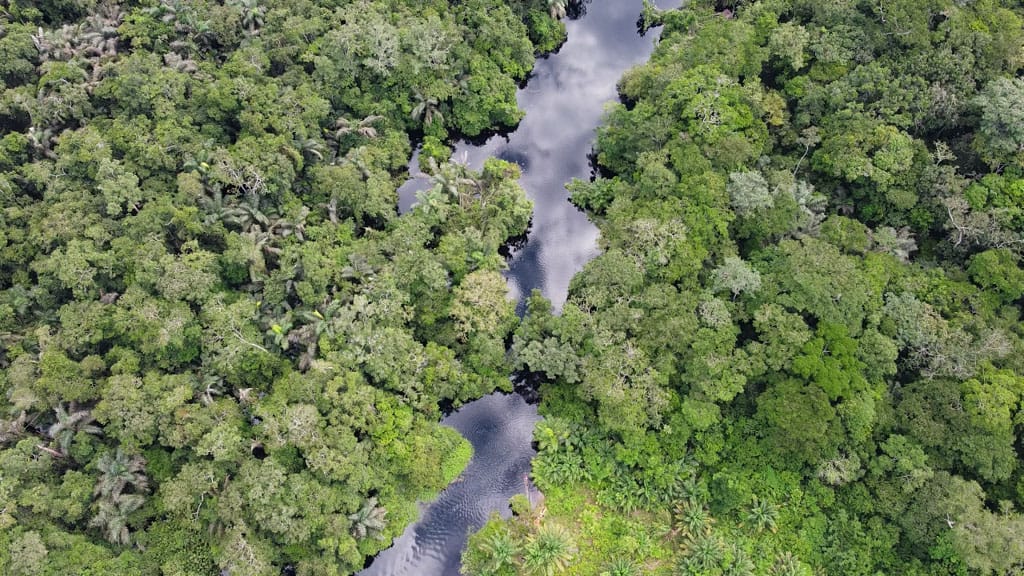
Deep Congo Basin Rainforest – Vast, intact wilderness filled with primates, forest mammals, and extraordinary biodiversity.
Primate Diversity Encounters – Forests alive with colobus monkeys, mangabeys, guenons, and elusive nocturnal species.
Remote Canoe Expeditions – Multi-hour river journeys revealing untouched landscapes inaccessible by road or conventional safari.
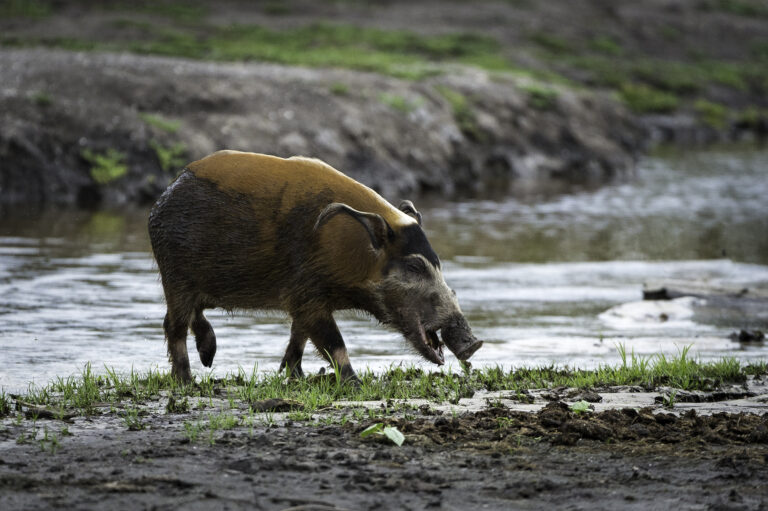
Top Mammals – Bonobo, Black Mangabey, Wolf’s Guenon, Red-tailed Monkey, Allen’s Swamp Monkey, Angolan Colobus, Red River Hog, Blue Duiker, Peter’s Duiker, Weyns’s Duiker, African Brush-tailed Porcupine, African Palm Civet, White-bellied Pangolin, Giant Pangolin
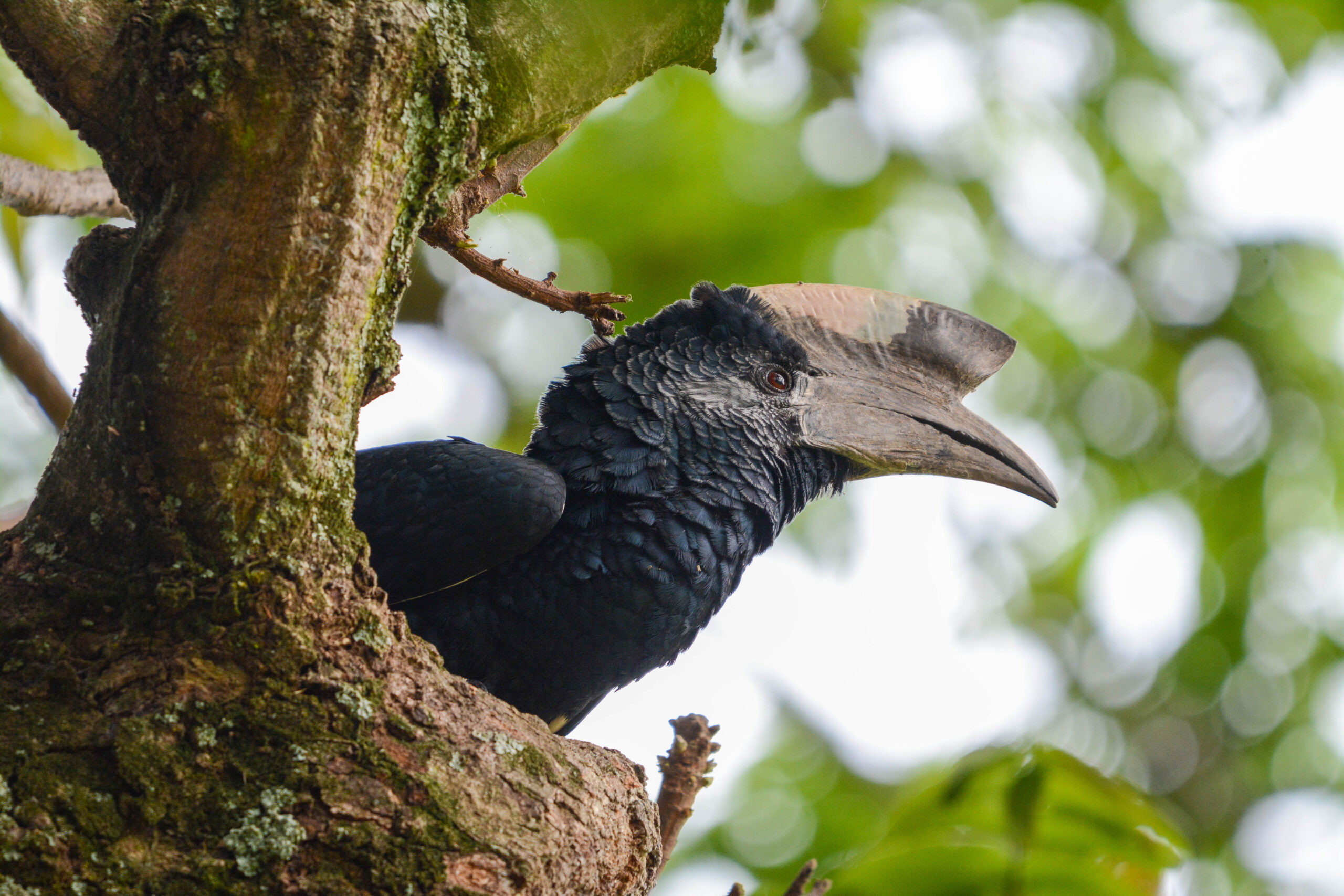
Top birds – Congo Peafowl, African Finfoot, Congo Serpent Eagle, Vermiculated Fishing Owl, African Dwarf Kingfisher, Grey Parrot, Black-casqued Hornbill, White-crested Hornbill, Black Bee-eater, Bates’s Paradise Flycatcher

Day to day summary:
| Day 1 | Arrival in Kinshasa |
| Day 2 | Kinshasa to Basankusu |
| Day 3 | Basankusu to Lingunda |
| Day 4 | Ligunda to Lomako-Yokokala Reserve |
| Day 5-10 | Lomako-Yokokala Reserve |
| Day 11 | Lomako-Yokokala Reserve to Ligunda |
| Day 12 | Ligunda to Basankusu |
| Day 13 | Basankusu to Kinshasa |
| Day 14 | Departure |
Day to Day Itinerary
DAY 1: Arrival in Kinshasa
Arrival in Kinshasa, the bustling capital of the Democratic Republic of Congo, set along the Congo River and serving as the gateway to the vast Congo Basin rainforest. After a meet-and-greet at the airport, transfer to the hotel for an overnight stay.
This region is the only place on Earth where the endangered Bonobo (Pan paniscus) occurs, a highly intelligent great ape known for its complex social behaviour and restricted range south of the Congo River. Even within the city’s greener areas and riverine habitats, early bird sightings may include Speckled Mousebird, Olive-bellied Sunbird, Red-eyed and Ring-necked Dove, Dark-capped Bulbul, Tawny-flanked Prinia, African Thrush, Slender-billed Weaver, Northern Grey-headed Sparrow and Rufous-tailed Palm Thrush. The evening is at leisure to rest ahead of the expedition into one of Africa’s most remote and biodiverse forests.
DAY 2: Kinshasa to Basankusu
After breakfast, transfer to the airport for a private charter flight of approximately three hours to Basankusu in Equateur Province. On arrival, a short five-minute walk leads to the accommodation for an overnight stay.
Following a late lunch, a guided walk through town offers insight into local life. Basankusu, founded by the Okutsu of the Mongo people, lies along the Lulonga River, a major tributary of the Congo River and a key access point to the surrounding rainforest. The region supports exceptional biodiversity, including one of the strongest populations of Congo Peafowl (Afropavo congensis).
Birding around the town and riverine habitats may produce Bob-tailed Weaver, Chattering Cisticola, Village Weaver and Vieillot’s Black Weaver, along with African Harrier-Hawk, African Paradise Flycatcher, and Pin-tailed Whydah. The surrounding forests support Bonobo, Black Mangabey, and other Central African forest specialists, marking the transition into one of Africa’s most remote and biologically rich wilderness areas.
DAY 3: Basankusu to Lingunda
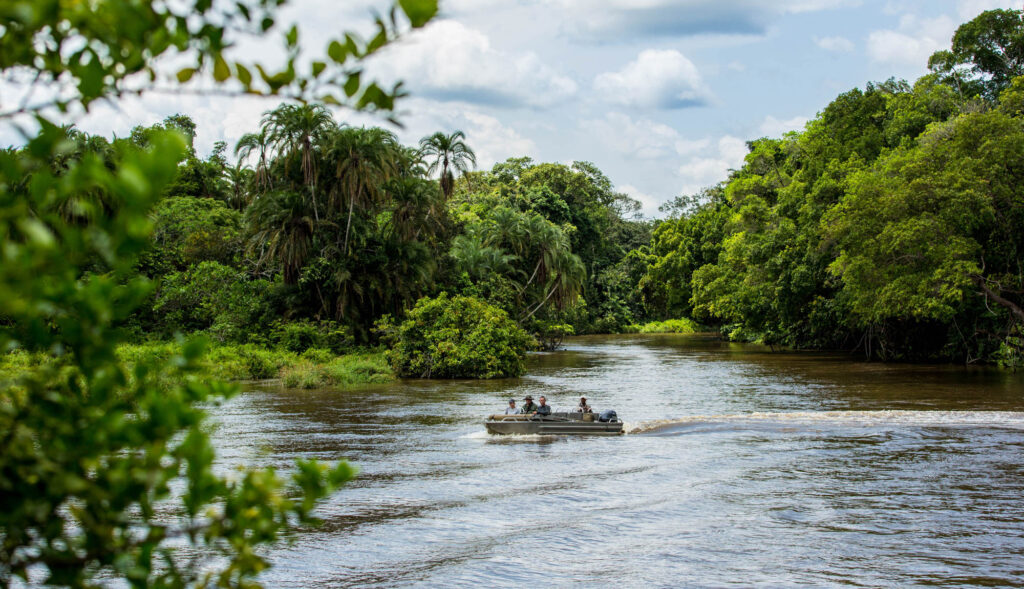
An early start at 06:00 includes a short walk to the river, where a traditional dugout canoe waits for a full-day journey of approximately ten hours deep into the Congo Basin rainforest. Seating is arranged in chairs for comfort, with umbrellas recommended for sun and rain protection. Meals and refreshments are provided throughout the day, including breakfast, lunch, coffee, and snacks. The slow passage along the river system offers uninterrupted immersion in one of the world’s most intact rainforest environments, where riverbanks, forest canopy, and open water reveal constant movement and sound.
Birding from the canoe may include Palm-nut Vulture, Cassin’s Hawk-Eagle, African Finfoot, Afep Pigeon, Cassin’s Spinetail, Black Bee-eater, Grey Parrot, African Fish Eagle, and Great Blue Turaco. River edges and forest openings may also reveal kingfishers, hornbills, and mixed flocks moving through the canopy, while primates such as Black Mangabey and other forest monkeys may occasionally be observed along the banks. The wider region forms part of the natural range of Bonobo, one of the Congo Basin’s most iconic and elusive great apes.
Arrival in Lingunda village takes place before nightfall. This remote settlement, deep within the rainforest, offers a rare overnight stay in near-total wilderness. The day stands as a highlight of the expedition, defined by silence, scale, and uninterrupted connection to one of Africa’s last great forest systems.
DAY 4: Ligunda to Lomako-Yokokala Reserve
After breakfast, Lingunda village is visited before returning to the Lomako River for a canoe journey of approximately 2 hours 30 minutes into the Lomako-Yokokala Faunal Reserve. This protected rainforest, lying between the Lomako and Yokokala rivers, is one of the most important strongholds for Bonobo and is also a key site for observing the highly elusive Congo Peafowl, a primary target species of this expedition and one of Africa’s most sought-after endemic birds.
On arrival, a three-hour walk leads through dense, undisturbed rainforest to the camp, which will serve as a base for the following days. Accommodation is simple and fully immersed in the forest, with clean spring water used for drinking and bucket showers, reinforcing the remote wilderness setting. This is deep primary rainforest, where extended time in the field offers rare opportunities for close encounters with Bonobos, often observed feeding, travelling, and interacting in cohesive social groups.
The Lomako forest supports a varied mix of mammals typical of the Congo Basin transition zone, including Angolan Colobus, Allen’s Swamp Monkey, Wolf’s Guenon, and Red River Hog. Smaller mammals such as Blue Duiker and African Brush-tailed Porcupine may also be present, while White-bellied Pangolin and galagos occur but are rarely seen.
Birding in this section of forest and along approach routes may produce Red-bellied Paradise Flycatcher, Bates’s Paradise Flycatcher, Purple-headed Starling, Buff-spotted Woodpecker, Yellow-crested Woodpecker, Dusky Tit, Grey Longbill, Little Grey Greenbul, Icterine Greenbul, and Red-tailed Greenbul. Other typical sightings include African Pied Hornbill, Blue-throated Roller, White-bellied Kingfisher, Yellow-billed Barbet, and Grey Parrot, reflecting the rich edge habitat between river and primary rainforest.
This marks entry into one of Africa’s most intact rainforest systems, where the focus is on prolonged field time in search of Bonobos and Congo Peafowl in a truly remote and scientifically significant wilderness.
DAY 5-10: Lomako-Yokokala Reserve
These days are dedicated entirely to exploration within the Lomako-Yokokala Faunal Reserve, one of the most important strongholds for Bonobos in the wild and a core site for this expedition. Each morning is reserved for guided Bonobo tracking in small groups of up to four participants, accompanied by experienced local guides and a specialist in Bonobo research and conservation. Depending on conditions and sightings, between two and three dedicated Bonobo trekking sessions are planned across this period.
This forest experience offers some of the most reliable opportunities in Central Africa to observe Bonobos in their natural habitat, often at close range and in extended social interactions such as feeding, grooming, and resting. The surrounding rainforest is exceptionally rich and intact, forming part of the vast Congo Basin ecosystem, where wildlife remains largely undisturbed by human presence.
Between trekking sessions, additional daytime and night walks explore the surrounding forest in search of other wildlife. Mammals in the area include Red-tailed Monkey, Wolf’s Guenon, Black Mangabey, Angolan Colobus, Allen’s Swamp Monkey, Red River Hog, and multiple duiker species such as Bay, Peter’s, and Weyns’s Duiker. Nocturnal species may include African Palm Civet, White-bellied Pangolin, Giant Pangolin, and several galago species, while Leopard and African Golden Cat occur but are extremely elusive.
Birding in the Lomako forest is exceptional, with Congo Peafowl a key target species and one of the most sought-after birds in Africa. Other species recorded in the wider reserve include African Finfoot, Hartlaub’s Duck, Congo Serpent Eagle, Vermiculated Fishing Owl, African Dwarf Kingfisher, Black Bee-eater, White-crested Hornbill, Black-casqued Hornbill, Sladen’s Barbet, Rufous-sided Broadbill, Bates’s Paradise Flycatcher, Gosling’s Apalis, Cassin’s Malimbe, Bob-tailed Weaver, Woodhouse’s Antpecker, and Grant’s Bluebill.
The Lomako-Yokokala experience is defined by time, patience, and immersion. Extended stays in this remote rainforest allow repeated encounters with Bonobos under natural conditions, offering one of the most exclusive primate viewing opportunities anywhere in Africa, set within a landscape of exceptional biodiversity and scientific importance.
DAY 11: Lomako-Yokokala Reserve to Ligunda
After breakfast, a three-hour walk leads through primary rainforest back to the Lomako River, passing Bonobo habitat along forest corridors and riverine edges. Mammals such as Red-tailed Monkey, Wolf’s Guenon, Black Mangabey, and Red River Hog may still be encountered along the way.
At the river, dugout canoes are boarded for a 2 hour 30-minute journey downstream to Lingunda. Birding along this stretch may produce Western Bronze-naped Pigeon, Fire-crested Alethe, Narina Trogon, Blue-throated Roller, Chestnut Wattle-eye, Western Nicator, Brown-eared Woodpecker, Slender-billed Greenbul, Cassin’s Spinetail, Red-billed Dwarf Hornbill, Black-collared Lovebird, Velvet-mantled Drongo, Spotted Greenbul, Tiny Sunbird, and European Honey Buzzard.
Arrival in Lingunda takes place in the afternoon, followed by time to relax and enjoy a sundowner in a remote rainforest setting, marking the transition out of the deep forest section of the expedition.
DAY 12: Ligunda to Basankusu
An early departure from Lingunda marks a full-day canoe journey of approximately 8–9 hours back towards Basankusu. Travelling along the Lulonga River system, the route follows forested banks, backwaters, and open channels that continue to reflect the richness of the Congo Basin ecosystem. This final river passage offers a last opportunity to observe Bonobo habitat within the wider landscape, along with river-edge wildlife such as Red River Hog, Black Mangabey, and various primates associated with the forest margins.
Birding along the route may include Hartlaub’s Duck, Black-casqued Hornbill, White-bibbed Swallow, Grey Pratincole, African Fish Eagle, African Finfoot, and Grey Parrot, with additional sightings possible in riverine woodland and sandbank habitats.
Arrival in Basankusu takes place in the evening, followed by dinner and overnight stay. This return to town signals the transition from deep rainforest travel back to more accessible landscapes, concluding the final river-based stage of the expedition through one of Africa’s most remote and biologically significant regions.
DAY 13: Basankusu to Kinshasa
The final morning begins with a short 30-minute boat journey from Basankusu to visit a group of orphaned Bonobos that have been successfully rehabilitated and released into a protected area. This rare opportunity offers insight into conservation efforts within the Congo Basin, where Bonobos exist only in the wild south of the Congo River and remain one of the world’s most endangered great apes.
After returning to Basankusu, transfer to the airstrip for a private flight of approximately three hours back to Kinshasa. The flight offers a final aerial perspective over vast stretches of rainforest and river systems that define the central Congo landscape, a region known for its extraordinary biodiversity, including species such as African Forest Elephant, Red River Hog, and forest primates in more remote areas.
Arrival in Kinshasa is scheduled for mid-afternoon, followed by transfer to the hotel for an overnight stay.
This marks the return from one of Africa’s most remote rainforest expeditions, concluding a rare journey through Bonobo territory and the Congo Basin’s most important lowland forest systems.
DAY 14: Departure
Breakfast at the hotel is followed by free time in Kinshasa, the vibrant capital of the Democratic Republic of the Congo set along the Congo River. Depending on schedule, the morning may allow for a short city experience, with opportunities for shopping or exploring key urban landmarks that reflect the city’s position as one of Africa’s largest cultural and political centers.
Later, transfer to the airport for international departure, ending an exclusive expedition that spans deep rainforest, remote river systems, Bonobo territory, and the most significant stronghold of Congo Peafowl in the wild.

You might also like: